Ever rising domestic debt has pushed the Malawi Government to engage individual local lenders to restructure the debt amid pressure from its rising interest bill.
However, the move is also delicate as restructuring the domestic debt has the potential to weaken the local financial sector.
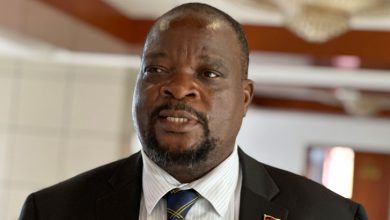
Minister of Finance, Economic Planning and Decentralisation Joseph Mwanamvekha confirmed the debt restructuring discussions in an interview on the sidelines of the 2026/27 Pre-budget Consultation Meeting in Mzuzu on Monday.
But the minister and local economists have cautioned that any restructuring of domestic obligations must be handled carefully to avoid destabilising the banking sector and undermining investor confidence.
Mwanamvekha said government already initiated debt restructuring discussions with bilateral and multilateral partners, but the fast-growing domestic debt burden has become a double-edged sword for the authorities.
He said the rising debt burden has placed severe pressure on the national budget, largely driven by interest payment obligations estimated at K2.27 trillion in the 2025/26 financial year (FY), equivalent to about 51.2 percent of domestic revenues.
Said Mwanamvekha: “We are doing it [discussions of domestic debt restructuring] in a manner that we do not want to disrupt the banking sector or any investor. Otherwise, if you mismanage that situation, I will guarantee you people will not want to invest.
“Actually, we are discussing with each investor because we do not want to make a blanket decision, as the level of borrowing varies from investor to investor. The amount of money that insurance and pension funds have invested is quite huge compared to the banks. So, it is a case-by-case basis.”
Domestic debt currently accounts for nearly 65 percent (about K14.56 trillion) of Malawi’s total public debt (TPD) stock of K22.4 trillion, according to latest Treasury figures. Three years ago in 2023, local borrowing constituted just 40 percent of TPD.
The rise demonstrates how much the composition of Malawi’s debt has shifted in recent years and the extent to which the Malawi Government has become increasingly reliant on the more costly domestic debt market— which includes financial and non-financial players—whose conditions for contracting debt are not as stringentas those demanded by external creditors.
Hovering around 90 percent of gross domestic product (GDP), the country’s TPD levels have risen over the past two decades and are creeping back to the Highly Indebted Poor Country (Hipc) initiative completion in 2006 when multilateral and some bilateral creditors under the Paris Club cancelled up to 84 percent ($2.3 billion) of the country’s external debt which before relief was nearly $3 billion.
That act of forgiveness cut Malawi’s unsustainable debt from 142 percent of GDP at the end of 2005 to 23 percent by December 2006, only for the country to return to its bad borrowing habits that now put TPD at around 90 percent of the total size of the economy— and rising, driven by huge deficits largely financed through domestic borrowing with short-term maturity periods that attract high interest rates.
The International Monetary Fund (IMF) states that as of end-2024, roughly a third of domestic debt was held by local commercial banks and the domestic non-bank sector that includes pension and insurance funds as well as the Reserve Bank of Malawi (RBM), respectively.
The interest bill, owed mostly to residents and has grown to nearly seven percent of GDP in FY2024/25, is projected to exceed eight percent in FY2025/26 and remain elevated over the medium term, according to the IMF in the Malawi Staff Report for the 2025 Article IV Consultation.
That explains why Treasury’s negotiations with local lenders are so delicate.
Meanwhile, Mwanamvekha said Malawi has already made limited progress on external debt restructuring with bilateral partners.
He said multilateral creditors involved in the discussions include the World Bank, IMF, the African Development Bank and Africa Export and Import Bank (Afreximbank) while bilateral engagements include negotiations with China and India. The minister said the discussions are expected to conclude before April 2026, the onset of the 2026/27 financial year.
However, in June 2025 Afreximbank disputed Malawi Government assertions that they were engaged in debt restructuring negotiations, stating in a statement: “For clarity, the bank’s establishment agreement is a treaty entered into by, and among, all participating States and between the participating States and the bank.
“Accordingly, Afreximbank would like to reaffirm that it is not participating in debt restructuring negotiations related to any of its member countries. To do so would be inconsistent with the bank establishment treaty.”
Malawi Government has concluded a restructuring agreement with China, covering about $206 million in loans through extended maturities and revised terms while a further $20 million was cancelled.
On the other hand, discussions with India are ongoing, with authorities indicating willingness on both sides to reach an agreement, although officials caution that the deals remain partial and broader restructuring efforts are still under negotiation.
In an earlier interview, IMF resident representative Nelnan Koumtingue cautioned that domestic debt restructuring carries significant risks, including potential disruption to banks, pension funds and the domestic bond market.
However, he said timely and transparent restructuring, if anchored in a comprehensive macroeconomic adjustment programme, can help restore market confidence and avert more severe crises caused by delaying reforms.
Koumtingue stressed that any such process must be accompanied by strong fiscal consolidation, improved debt management and measures to address the root causes of debt accumulation.
Commenting on the matter, financial analyst Sylvester Malumba said domestic debt restructuring must be approached cautiously because of its close link to Malawi’s financial system.
He said most domestic debt is held by local banks, pension funds and insurance companies, meaning aggressive restructuring could destabilise the sector.
“It should be gradual, well-coordinated, and supported by broader fiscal and economic reforms to avoid crowding out the private sector and undermining growth. Revenue mobilisation can serve as a key enabler to sustain local debt restructuring,” said Malumba.
“Government can extend maturities by converting short-term Treasury bills into longer-term bonds, improve rollover management, and reduce borrowing costs through stronger macroeconomic stability.”
Economics Association of Malawi president Bertha Bangara Chikadza noted that domestic creditors are deeply intertwined with the financial system, meaning any changes to repayment terms can affect banks’ balance sheets, pension fund returns and the savings of ordinary Malawians.
She said: “This creates a risk of weakening financial institutions if restructuring is too aggressive.
There are also legal and contractual constraints that limit how quickly or easily terms can be altered, requiring careful coordination with regulators.
“Beyond the technical issues, domestic debt restructuring is politically sensitive because it directly affects local institutions and citizens, making it harder for the government to implement bold measures without risking public backlash or loss of confidence.”
Alongside expenditure discipline, Bangara-Chikadza, who teaches economics at the University of Malawi in Zomba, said improvements in tax revenue are crucial, not through higher tax rates, but through better administration, reduced leakages and stronger compliance, particularly among large taxpayers as part of controlling local borrowing.
On his part, economist Horace Phiri from Lilongwe University of Agriculture and Natural Resources said the most viable option in Malawi’s context would be extending repayment periods to reduce monthly debt-servicing costs.
“Moving forward, we need to live within our means—by reducing subsidies in agriculture, health and education, cutting wastage, enacting laws that cap borrowing and, in the long run, investing in productive sectors to widen the tax base,” he said.
Mzuzu University-based economist Christopher Mbukwa said domestic borrowing is often easier for governments than external borrowing because parliamentary oversight tends to be weaker.
He said in many countries, Parliament plays a stronger role in setting borrowing ceilings, instruments and purposes, suggesting Malawi should adopt similar safeguards.
“We can also restructure by adjusting the coupon rate; however, this is difficult because it affects cash flows to local savers and institutions,” said Mbukwa.
In a working paper published in October last year, the IMF warned that delaying domestic debt reforms often leads to deeper crises, citing experiences where countries that postponed action faced failed bond auctions, depleted reserves and surging inflation, while those that acted early were better able to restore market confidence.